
Research ecommerce ads, compare online stores and explore TikTok Shop products and creators. Follow competitor campaigns from the creative to the landing page and checkout.
Used this tool? Rate it
Used this tool? Rate it


Product photo editing for online stores


One-click AI background removal at scale


AI image editing from a reference photo


Multi-model image studio, free to start


Natural AI photo editing for portraits and projects


AI assistant for writing, analysis and tasks


From a prompt to a deck, site or doc


Build random generators, share them free
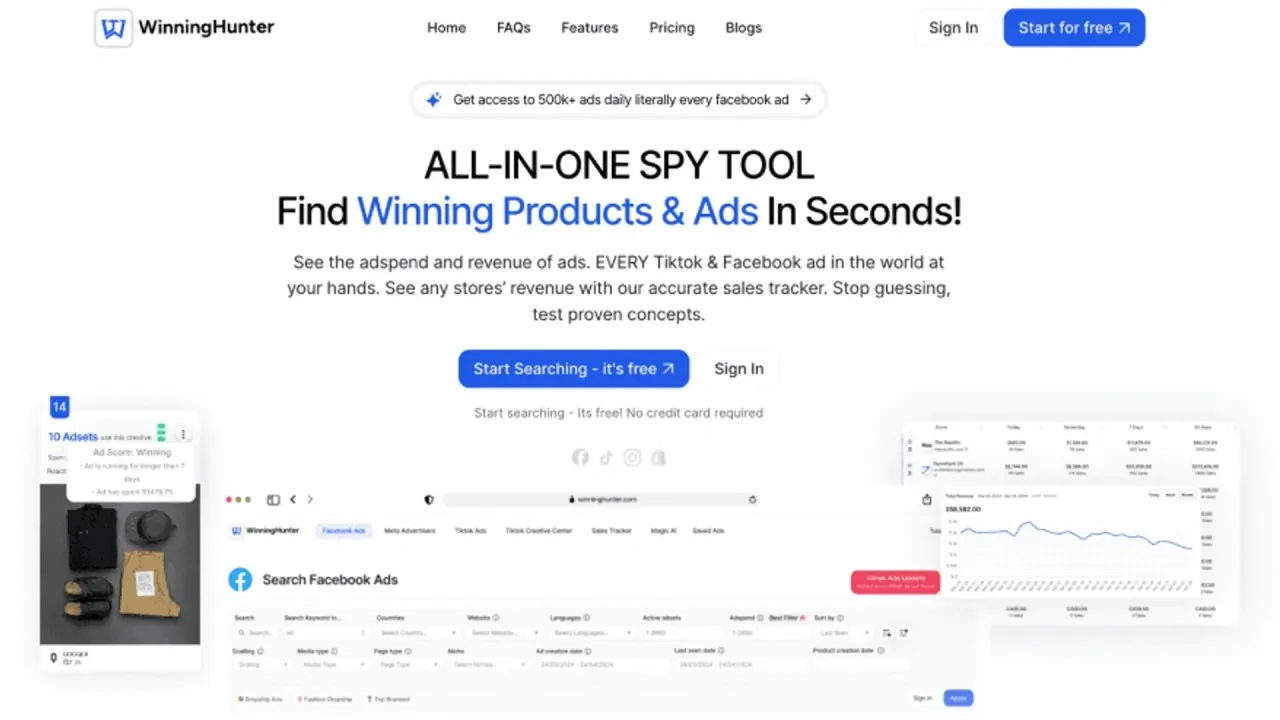
Winning Hunter (branded WinningHunter) is an ecommerce research workspace that brings together ad, store, brand and TikTok Shop research. A media buyer can start with the creative a shopper encounters, while a merchant can start with a product or competing store. The same investigation can then move from the creative to the store and onward to the offer a visitor sees upon arrival. Ecommerce teams can use that connection to describe how a competitor sells something, without treating the observation as proof that the same offer would perform for their own store.
The workspace answers different questions at each level. An ad gives a concrete example of a hook and the way it is presented. A store profile puts the seller's catalogue and traffic information in view. Brand tracking is useful when the campaign matters as part of a broader effort, such as a retailer using several messages to drive shoppers toward a single bundle. TikTok Shop adds the seller and creator angle for research centered on commerce inside that platform. Taken together, these perspectives help researchers distinguish a product from one particular way of marketing it.
The ad, post-click page and email sequence can each carry a different part of the sales argument. For example, an ad may introduce a problem, the landing page may demonstrate how a product solves it and a follow-up may mention shipping. The distinction matters when preparing a brief. A change to an opening hook and a change to the amount of detail on a page are separate tests, even if they came from reviewing the same competitor.
Brand Tracker maps the route from a tracked ad to its landing page, product page and checkout flow. For a team evaluating a new page, the path gives a place to compare the promise in an ad with what the shopper sees next. A retailer selling a refill kit, for example, could examine whether a competing ad emphasizes a one-time purchase while the subsequent page emphasizes the recurring offer. That pattern may be relevant to the brief even when the competitor's actual conversion figures are unknown.
A team can also view the funnel from the other direction. If several ads appear to lead toward the same offer, the clips may give different reasons to visit while the rest of the buying journey stays broadly consistent. The creative team can identify the range of promises and the page team can look at which of those promises the destination addresses. The research supports a review of how messages and offers work together without requiring the competitor's private ad account.
Landing page results can be sorted by active ad count, growth or running time. That is useful for a product category where pages differ as much as the creatives themselves. Compare, for example, pages that introduce a cosmetic product through a tutorial with pages that lead with a set of product benefits and move directly to purchase. Grouping by format helps isolate which questions each page format is set up to answer.
A format comparison can also reveal when two apparent competitors present different propositions after the click. A retailer showing a single introductory offer addresses a different decision from one steering shoppers through a set of product choices. In that situation, the more relevant example for a landing page brief is the one with a comparable buying decision. A page's associated ad activity is useful context, and conversion still depends on what shoppers do on the page.
For a team interested in its own return on ad spend or product-level margin, the relevant inputs are its own campaign and order records. Winning Hunter fits earlier in the decision. It can help define an offer or audience hypothesis from external observations. The retailer's own spend, orders and product costs answer a later question about whether its test made money. A shop with a recurring competitor review is also more likely to benefit from a detailed brand watchlist than a merchant doing an occasional advertising check.
The website links to separate browser sign-in and sign-up pages for the Winning Hunter app. The ads and commerce services it covers describe sources a researcher can study.
Winning Hunter documents MCP connections for Claude, ChatGPT, Gemini and Cursor. MCP is the connection an AI client can use to request research from the service. That creates a different entry point from browsing through the dashboard. In an example research prompt, a user could specify the product category, the market and the particular aspect of the creative to compare. The resulting examples still need to be evaluated against the search scope. Querying through an AI client changes how a request is made, while the underlying advertising and store data still have their own coverage and measurement limits.
Winning Hunter advertises a free starting option and paid subscriptions. The English app pricing page lists Meta, Google, Pinterest and TikTok ads under Standard. Free access is therefore most useful for understanding the starting workflow and the difference between looking up a store and doing ongoing cross-channel creative research. The package needed for recurring work depends on which part of the product the buyer expects to use.
The public plan cards advertise Basic at $30 per month, Standard at $49 per month and Enterprise at $150 per month, with yearly billing. The public terms state that payments are in euros. The dollar signs describe the displayed rates. Actual checkout currency and totals are outside the scope of this comparison.
The Brand Tracker FAQ lists up to 2 brands on Basic, 30 on Standard and up to 300 on Enterprise. The public comparison matrix lists 25 tracked brands for Basic, 50 for Standard and 500 for Enterprise. The English app pricing view lists 2 tracked brands for Basic, 30 for Standard and 200 for the higher tier it calls Premium. These are conflicting allowances from the captured plan displays, so a single cross-page quota cannot be inferred.
Brand slots matter most for recurring watchlists, while someone mainly looking up new products may care more about ad coverage and store search. The English app view says that each page of Magic AI results counts toward the monthly total on the plans that show a monthly cap. The developer documentation describes a shared monthly API and MCP credit pool, separate from TikTok Shop search credits.
The public terms say that cancellation takes effect at the end of the current paid term. The public terms state that purchases are nonrefundable. Under that language, the cancellation date and the end of access answer different questions, and a paid term carries a different commitment from exploring the free starting option.
Meta Ad Library shows ads that Facebook Pages are actively running. It is a focused option for a researcher who already knows the advertiser or wants to check what a brand is running on Meta. For a narrow creative brief, observations from a direct lookup can provide enough detail to compare the ad format and opening message. Winning Hunter addresses a broader workflow where the researcher wants to follow examples into a view of the seller, other channels or the pages behind the campaigns.
TikTok’s Top Ads dashboard collects high-performing creatives and can filter them by region, industry and campaign objective. It fits a creative exploration centered on video style and presentation within that platform. A TikTok Shop study starts from a different question about an item, its sellers or how creators present it. The value of a combined workspace is clearest when the researcher has both questions in the same project. If the task ends at finding reference videos, the platform's advertising examples cover that narrower task.
Yes. Magic AI image search starts from a product image and looks for shops offering the product. Similar imagery is a starting point for checking whether listings actually offer the same item or a different configuration of it.
The range represents the vendor's estimate of store revenue. A listing or bestseller shown on the same profile is contextual information. The presence of that item on the profile does not allocate any part of the store's revenue to it.
The public terms say cancellation takes effect when the current paid term ends. They also describe purchases as nonrefundable.