
The 2026 verdict: Claude's prose lead, ChatGPT's versatility, why Jasper's 54% revenue collapse reframes specialist tools, and the right pick for you.
For pure writing quality, Claude wins 2026 — the most natural sustained prose, reliable instruction-following, fewer hallucinated facts. ChatGPT remains the versatility pick for brainstorming, research-heavy drafts and everything-in-one-tab workflows. The specialist tier contracted: Jasper's ~54% revenue collapse is the market pricing a hard question — what's worth $59/month when $20 general tools write this well? (Answer: brand-voice enforcement for teams. Little else.)
Writing quality became a frontier-model property in 2026. The specialists that once sold "better output" now sell workflow around output someone else's model produces — which is why the interesting comparison is between two model vendors, not between ten writing apps.
The 2026 testing consensus is unusually consistent: Claude produces the most natural long-form writing — essays, narratives, technical explanation — holding quality across length where competitors drift generic. It follows nuanced style constraints reliably and hallucinates less than lighter models. The free tier runs a current-generation Sonnet model (free-tier comparison), making top-shelf writing quality effectively free for light use; Pro is $20/month.
Weakness: ecosystem breadth — no native image generation, thinner voice story. It writes; ChatGPT does everything adjacently.
Stronger for idea generation, research-assisted drafting (browsing + files + memory), and mixed workflows where writing is one task among many. Dreaming V3 memory is quietly a writing feature: it retains your voice preferences across sessions. Plus is $20/month.
Weakness: sustained long-form voice — the "competent but corporate" drift under length remains real in 5.5-era testing, manageable with deliberate prompting.
Claude Sonnet 5 (June 30, 2026) opened at introductory $2/$10 per million tokens through August 31, then $3/$15 — and posts 1,618 on GDPval-AA v2 knowledge work, edging the previous Opus flagship. If you're using Claude through the API for writing pipelines rather than the chat product, that's the tier to build on (full lineup).
OpenAI's July 9 GA shipped three named tiers — Sol $5/$30, Terra $2.50/$15, Luna $1/$6 — with Luna cut 80% and Terra 20% on July 30. For high-volume content pipelines where prose quality is "good enough," that repricing changes the math considerably.
Jasper's reported ~54% revenue collapse tells you what happened when general models got great at writing: the $59/month specialist premium stopped clearing for individuals. What survives is the team case — Brand Voice (upload examples, extract a voice profile, enforce it across every output) plus campaign workflows. If you run marketing across a team producing 20+ pieces monthly with brand-consistency requirements, Jasper (or a marketing-suite alternative) still earns its seat. Solo writers: the money says no, and the money is right.
Three things, and only three: brand-voice enforcement across a team, campaign workflow (brief → variants → channels), and governance (who approved what, which claims are pre-cleared). None of these are writing features. All of them are process features that a general model doesn't provide.
If the deliverable is one long piece, model quality dominates and you want Claude. If it's forty short pieces on brand, workflow dominates and a specialist may still earn its seat. If it's research-heavy drafting, ChatGPT's browsing-plus-memory loop wins on total time.
Most working writers land on a model for drafting plus an editing layer (Grammarly or equivalent) for the pass before publish. Adding a third tool rarely pays unless it's enforcing something a human would otherwise check manually.
Benchmarks and roundups use generic prompts. Run your hardest recurring task — the piece you dread — through two tools before committing. The gap that matters shows up there, not on a sample brief.
| Writer | Pick | Why |
|---|---|---|
| Essayist / long-form | Claude Pro | Quality holds at length |
| Content marketer (solo) | ChatGPT Plus | Research → draft → variants in one loop |
| Marketing team w/ brand rules | Jasper | Voice enforcement at scale |
| Technical writer | Claude | Precision + code fluency |
| Casual / budget | Claude free + Gemini free | Best zero-cost quality stack |
The category quietly resolved: writing quality became a frontier-model property, not a product feature. The winners are the model owners; the surviving specialists sell workflow and governance, not words. Choose your model for prose, your product for process.
Sources: Zemith 12-tool testing · ToolCenter May 2026 comparison · Heitan Lab four-way test · LumiChats verdict · BuildMVPFast July snapshot
Last updated: July 29, 2026
The 2026 audio stack by job: ElevenLabs for voice, Descript for edit-by-transcript production, Suno for music, plus realtime voice APIs and picks.

The 2026 AI coding landscape with real numbers: Codex's 5M weekly users, Claude Code's $2.5B run-rate, Copilot's 42% share — and why most teams buy two.
AI support in 2026: Intercom Fin's AI-first model, Zendesk's ticket-first depth, real per-resolution pricing math, and how to pick for your team.
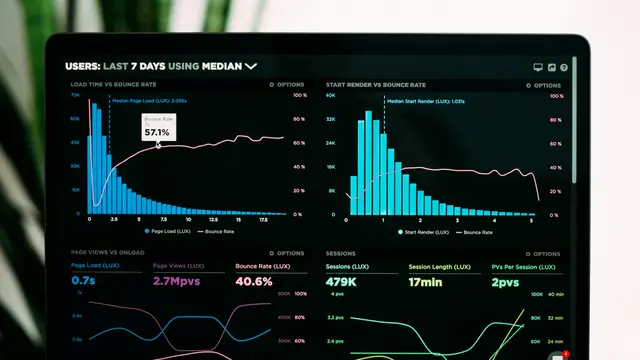
The 2026 data stack: ChatGPT's Python-running analysis, Julius for analytics-native work, Hex and Deepnote for teams, and why BI still wins its lane.

AI design in 2026: Canva's Magic Studio for non-designers, Figma's maturing AI layer, Adobe Firefly's commercial-safety lane, and what 72% use changed.

The 2026 image field ranked: Midjourney V8.2's aesthetic lead, GPT Image 2's all-round strength, open-weight Flux 2, Imagen 3 and Firefly's safety lane.

The 2026 marketing stack: where Jasper's Brand Voice earns its price, HubSpot Breeze's CRM advantage, Copy.ai's GTM automation, and the volume test.

The 2026 stack: Notion's context-rich agents, Motion's autonomous scheduling, NotebookLM's grounded research, and why agentic stopped being a buzzword.
