
The 2026 stack: Notion's context-rich agents, Motion's autonomous scheduling, NotebookLM's grounded research, and why agentic stopped being a buzzword.
| Job | Pick | Why |
|---|---|---|
| Workspace command center | Notion AI ($10/mo) | Agents with context on all your work |
| Calendar & task autopilot | Motion | Autonomous time-blocking that actually holds |
| Grounded research | NotebookLM | Answers only from your sources |
| Meetings | Fireflies (or platform-native) | Transcription commoditized; pick by integration |
| General assistant | ChatGPT / Claude / Gemini | Pick by strength |
The year's real shift: agentic went from demo to default. Motion, Zapier Agents and ClickUp Autopilot all run autonomous multi-step actions with minimal supervision — the productivity question moved from "which AI writes better" to "which agent do I trust with standing permissions."
Adding AI to the platform that already holds your notes, tasks, docs and databases creates the thing standalone assistants can't fake: an agent that starts every job warm. The 2026 leap was Custom Agents — autonomous, schedule/event-triggered, reading your PPTX/XLSX/PDF attachments, now with code-executing Workers. At $10/month it's the best-value serious tool on this list.
Notion's plans run Free / Plus $10 / Business $20 / Enterprise (custom) per user per month, with full Notion AI bundled into Business and Enterprise rather than sold as an add-on. Custom Agents consume credits at $10 per 1,000, monthly with no rollover — budget for seats plus credits, and start the credit allocation low since unused credits vanish.
Trade-off: the value is proportional to how much of your life already lives in Notion. Partial adopters get partial magic. (Hands-on guide →)
Motion's pitch matured from "AI calendar" to full autopilot: it ingests tasks, priorities and meetings, then time-blocks your week autonomously, re-planning when reality interferes. 2026's agentic upgrade wave put it alongside Zapier Agents and ClickUp Autopilot in the run-unattended class.
Trade-off: you have to let it drive — chronic manual overrides collapse its value. Personality-dependent in the most literal sense.
The safest tool in the stack: load your documents, get answers only from them. For briefing packs, research corpora, meeting-prep from long reports, it's become the default "closed-corpus" tool — and it's bundled free in Gemini's tier.
Transcription accuracy stopped differentiating; Fireflies and platform-native recorders all clear the bar. Choose by where notes must land (CRM, Notion, tickets) — the integration is the product now.
One frontier assistant belongs in every stack; pick by your dominant task: ChatGPT for breadth+memory, Claude for writing/analysis, Gemini for the free bundle. For automation between tools, the workflow-automation guide covers Zapier/Make/n8n.
Two or three tools used deeply beat seven used shallowly. Start with your biggest bottleneck (calendar chaos → Motion; scattered knowledge → Notion; meeting overload → Fireflies), run it for a month, then add one more. Agentic tools especially reward depth: permissions, trust and muscle memory compound.
The 2026 shift from assistants to agents changed what you're actually evaluating. A tool that only responds is judged on output quality. A tool that acts unattended is judged on what it can reach, what it can change, and what happens when it's wrong. Before granting standing permissions, know the blast radius.
Most stack bloat comes from adding tools before finishing step 3 on the first one.
80% of enterprises now embed an AI agent in at least one production application (33% in 2024) — but only 23% are scaling one, and 88% of agent pilots never reach production. Individual productivity stacks are running ahead of organizational ones.
Median agent payback is 5.1 months; 41% see positive payback within twelve months and 22% are ROI-negative at twelve months. For a personal stack the equivalent test is simpler: if you can't name what an agent saved you after a month, it didn't.
The tools that survive this filter are the ones where the agent has real context — which is the entire argument for Notion's position at the top of this list and against standalone agents that start every task cold. Enterprise adoption data →
Sources: Lindy 14-app testing · MyLifeNote 8-tool review · Ventureburn 2026 roundup · Dupple tested rankings · Notion 3.6 release notes
Last updated: July 29, 2026
The 2026 audio stack by job: ElevenLabs for voice, Descript for edit-by-transcript production, Suno for music, plus realtime voice APIs and picks.
The 2026 AI coding landscape with real numbers: Codex's 5M weekly users, Claude Code's $2.5B run-rate, Copilot's 42% share — and why most teams buy two.

AI support in 2026: Intercom Fin's AI-first model, Zendesk's ticket-first depth, real per-resolution pricing math, and how to pick for your team.
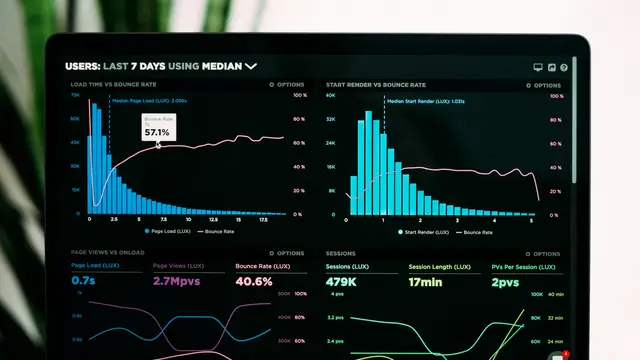
The 2026 data stack: ChatGPT's Python-running analysis, Julius for analytics-native work, Hex and Deepnote for teams, and why BI still wins its lane.

AI design in 2026: Canva's Magic Studio for non-designers, Figma's maturing AI layer, Adobe Firefly's commercial-safety lane, and what 72% use changed.

The 2026 image field ranked: Midjourney V8.2's aesthetic lead, GPT Image 2's all-round strength, open-weight Flux 2, Imagen 3 and Firefly's safety lane.

The 2026 marketing stack: where Jasper's Brand Voice earns its price, HubSpot Breeze's CRM advantage, Copy.ai's GTM automation, and the volume test.

The 2026 research stack tested: Perplexity's cited deep research, Elicit's literature reviews, Consensus's evidence meter — and how to combine all three.
