
AI support in 2026: Intercom Fin's AI-first model, Zendesk's ticket-first depth, real per-resolution pricing math, and how to pick for your team.
Intercom Fin if support happens inside your product and you want AI resolving before a human joins — it's the lowest-setup path to real deflection, at $0.99 per resolved conversation. Zendesk if you run a larger service desk with SLAs, queues and reporting — ticket-first depth plus Agent Copilot and rock-solid AI triage, at $1.50 (committed) / $2.00 (PAYG) per resolution.
The structural shift of 2026: pricing moved from seats to resolutions. Model your costs on volume, not headcount.
Intercom rebuilt itself around Fin: an AI agent fronting an omnichannel inbox, with workflows, help-center tooling, reporting and human-agent assistance (Copilot) behind it. The 2026 reputation is specific and earned — Fin rarely hallucinates; when it doesn't know, it hands off politely rather than inventing. For teams that don't want a months-long implementation, it's become the default.
Pricing shape: seats from ~$39 (Essential) / $99 (Advanced) / $139 (Expert) plus $0.99 per conversation Fin fully resolves.
Best for: product-led companies, in-app support, teams optimizing deflection rate.
The established platform for structured, high-volume service across email, phone and chat: queues, routing, SLAs, reporting, multi-brand. Its AI shows up as Agent Copilot (suggested replies, thread summaries, live sentiment flags) and AI triage (automatic ticket classification and routing) — the latter being genuinely excellent and underrated.
Pricing shape: ~$19 (Team) / $55 (Professional) / $115 (Enterprise) per agent, plus $1.50 committed or $2.00 pay-as-you-go per AI resolution.
Best for: larger support orgs, complex workflows, compliance-heavy industries, anyone whose ops already run on tickets.
Per-resolution pricing means your break-even is a volume question, not a preference:
Model both components against your actual mix. And measure deflection honestly: a "resolution" that produces a follow-up ticket next day isn't one.
| Your situation | Pick |
|---|---|
| Customers ask for help inside your product | Fin |
| Big desk, many agents, SLAs and reporting | Zendesk |
| Fast setup matters more than configurability | Fin |
| Complex routing, multi-brand, compliance | Zendesk |
| Low ticket volume, small team | Either — start with entry tiers and measure |
Per-resolution pricing was set when inference was expensive. Frontier model prices moved sharply in July 2026 — GPT-5.6 Luna cut 80%, Gemini 3.6 Flash at $1.50/$7.50, Sonnet 5 at introductory $2/$10. Vendor cost bases changed even where list prices didn't. Renegotiate at renewal.
80% of enterprises embed an AI agent in at least one production application, but only 23% are scaling one and 88% of agent pilots never reach production. Customer service is the category where agents most often do reach production — the task is bounded, the success metric is unambiguous, and the fallback (a human) already exists.
Three properties most agent deployments lack: a clear terminal condition (resolved or escalated), a cheap failure mode (hand off to a person), and existing measurement (CSAT, resolution rate, time to first response). Where those three hold, agents work; where they don't, you get the 88%.
Median agent payback across enterprises is 5.1 months, with 22% ROI-negative at twelve months. In support, you'll know inside one quarter — deflection rate against fully-loaded agent cost is a two-line calculation. Run it monthly, not annually.
Support was the first function where AI agents got real production accountability — measured in resolution rates and CSAT rather than demos. That makes it a preview of where enterprise AI adoption is heading: value concentrated in teams that instrument outcomes, not in teams that buy tools.
Sources: Zendesk's Fin alternatives comparison · Helply support-tools review · Twig's 2026 evaluation · SiteGPT Zendesk vs Intercom · Layer3Labs comparison
Last updated: July 29, 2026
The 2026 audio stack by job: ElevenLabs for voice, Descript for edit-by-transcript production, Suno for music, plus realtime voice APIs and picks.

The 2026 AI coding landscape with real numbers: Codex's 5M weekly users, Claude Code's $2.5B run-rate, Copilot's 42% share — and why most teams buy two.
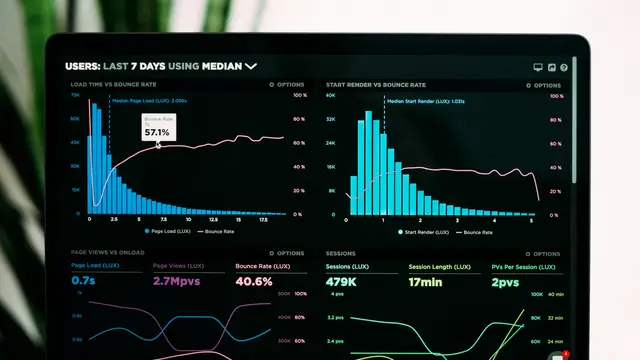
The 2026 data stack: ChatGPT's Python-running analysis, Julius for analytics-native work, Hex and Deepnote for teams, and why BI still wins its lane.

AI design in 2026: Canva's Magic Studio for non-designers, Figma's maturing AI layer, Adobe Firefly's commercial-safety lane, and what 72% use changed.

The 2026 image field ranked: Midjourney V8.2's aesthetic lead, GPT Image 2's all-round strength, open-weight Flux 2, Imagen 3 and Firefly's safety lane.

The 2026 marketing stack: where Jasper's Brand Voice earns its price, HubSpot Breeze's CRM advantage, Copy.ai's GTM automation, and the volume test.

The 2026 stack: Notion's context-rich agents, Motion's autonomous scheduling, NotebookLM's grounded research, and why agentic stopped being a buzzword.

The 2026 research stack tested: Perplexity's cited deep research, Elicit's literature reviews, Consensus's evidence meter — and how to combine all three.
