
The 2026 marketing stack: where Jasper's Brand Voice earns its price, HubSpot Breeze's CRM advantage, Copy.ai's GTM automation, and the volume test.
Before comparing tools, answer one thing: do you publish 20+ pieces a month with brand-consistency requirements across a team? If yes, a specialist platform earns its price. If no, a $20 general assistant plus discipline covers you — and Jasper's ~54% revenue collapse is the market's verdict on paying $59/seat for what general models now do well.
Above the threshold: Jasper for brand content, HubSpot Breeze if you live in HubSpot, Copy.ai for go-to-market automation.
The durable moat isn't writing quality; it's Brand Voice: upload existing content, Jasper extracts a voice profile, and every output — blog, ad copy, email, social — stays inside those guardrails. For a team of six producing across channels, enforced consistency is worth real money; for a solo marketer, it isn't.
Price: ~$59/seat/month. Verdict: correct choice for brand-governed teams, hard to justify below that.
Breeze adds conversational data access, content suggestions and automated workflows on top of HubSpot's CRM and Marketing Hub. The advantage is the same as Notion's in productivity: an AI with context on your actual pipeline beats a smarter AI with none.
Best for: B2B teams already standardized on HubSpot. Not for: anyone who'd adopt HubSpot because of Breeze — buy the CRM on CRM merits.
Copy.ai repositioned from copywriting to go-to-market workflow automation — sequences that bridge sales and marketing (lead research → personalized outreach → follow-up orchestration). For lean teams where one person owns both functions, it's the most leveraged tool in this list and the least discussed.
Salesforce Agentforce + Einstein for organizations already on Salesforce; Surfer SEO / Frase for search-driven content operations; Canva Magic Studio for the visual side (design tools). None replace the core writing/CRM decision — they're specialists you add once volume justifies them.
| Your situation | Pick |
|---|---|
| Solo marketer, <20 pieces/month | A general assistant ($20) + a style doc |
| Team with brand guidelines, high volume | Jasper |
| Already all-in on HubSpot | Breeze |
| Lean team spanning sales + marketing | Copy.ai |
| Enterprise on Salesforce | Agentforce |
| SEO-led content operation | Surfer/Frase + a general assistant |
Two things worth internalizing:
Writing quality stopped being a differentiator. Frontier models write well enough that "our AI writes better" is no longer a defensible pitch. Surviving specialists sell governance, workflow and integration — which is why Brand Voice, CRM-native context and GTM sequencing are the actual products now.
Agentic marketing arrived quietly. The autonomous-agent wave reached marketing ops: scheduled campaign agents, autonomous lead research, workflow platforms with AI nodes. Most teams under-use this and over-buy content generation.
The enterprise-AI pattern applies here with force: fewer than a fifth of organizations tracked KPIs for their AI initiatives. Marketing has no excuse — you already measure everything. Instrument content output against pipeline before renewing any AI seat, or you're buying volume, not results.
56% of CEOs report zero measurable ROI from AI deployment, and 22% of agent deployments are ROI-negative at twelve months — against a median payback of 5.1 months. Marketing's advantage is that the payback window is short and the attribution machinery already exists. Use it.
Every tool in this list runs on a frontier model, and those prices moved sharply in July 2026: GPT-5.6 Luna cut 80% and Terra 20%, Gemini 3.6 Flash at $1.50/$7.50, Claude Sonnet 5 at introductory $2/$10.
Specialist platforms priced their seats when inference was expensive. As the underlying cost falls, the seat price has to justify itself on workflow and governance alone — which is exactly the pressure that produced Jasper's revenue collapse. Renegotiate at renewal; the vendor's cost base changed even if their price list didn't.
For teams with any engineering capacity, "general model plus a style guide plus a script" is a more credible alternative in 2026 than in 2025. Not for everyone — but worth pricing before signing a multi-seat annual contract.
Sources: Improvado's 36-tool ranking · FastStrat Jasper vs Copy.ai vs HubSpot · FastStrat Breeze SMB analysis · Dupple tested rankings · ToolsRadar product-marketing tests
Last updated: July 29, 2026
The 2026 audio stack by job: ElevenLabs for voice, Descript for edit-by-transcript production, Suno for music, plus realtime voice APIs and picks.

The 2026 AI coding landscape with real numbers: Codex's 5M weekly users, Claude Code's $2.5B run-rate, Copilot's 42% share — and why most teams buy two.

AI support in 2026: Intercom Fin's AI-first model, Zendesk's ticket-first depth, real per-resolution pricing math, and how to pick for your team.
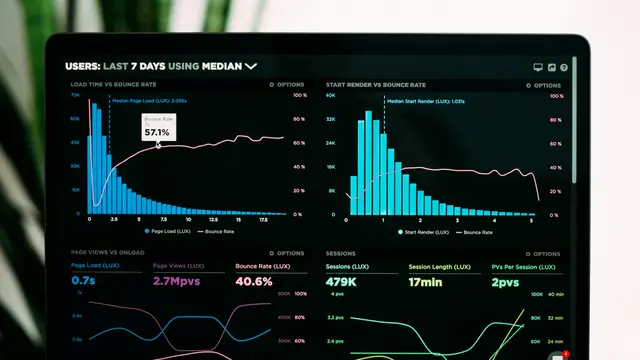
The 2026 data stack: ChatGPT's Python-running analysis, Julius for analytics-native work, Hex and Deepnote for teams, and why BI still wins its lane.

AI design in 2026: Canva's Magic Studio for non-designers, Figma's maturing AI layer, Adobe Firefly's commercial-safety lane, and what 72% use changed.

The 2026 image field ranked: Midjourney V8.2's aesthetic lead, GPT Image 2's all-round strength, open-weight Flux 2, Imagen 3 and Firefly's safety lane.

The 2026 stack: Notion's context-rich agents, Motion's autonomous scheduling, NotebookLM's grounded research, and why agentic stopped being a buzzword.

The 2026 research stack tested: Perplexity's cited deep research, Elicit's literature reviews, Consensus's evidence meter — and how to combine all three.
