
Prompt engineering for 2026: why leaner prompts score 10–15% higher, what reasoning modes made obsolete, the five patterns that survived, and agent specs.
The single biggest change: less hand-holding, not more. Reasoning models internalized chain-of-thought, so scripting the reasoning now costs you quality. Measured result: leaner prompts scored 10–15% higher while cutting tokens by up to 66%. State each instruction exactly once, control depth with reasoning-effort settings instead of prompt gymnastics, and spend your effort on framing the problem rather than coaxing the process.
Models like GPT-5.6 and the current Claude line reason internally before producing output. "Think step by step" was a genuine unlock in 2023 because the model wouldn't otherwise. In 2026 it's redundant instruction that consumes budget and occasionally derails a better internal plan.
Reasoning effort on the OpenAI side and thinking budget on Anthropic's are explicit dials — you set how hard the model works as a parameter. Any prompt language attempting the same thing ("think carefully," "take your time," "be thorough") is now competing with a control that does it properly.
The counterintuitive one, and it's measured rather than folklore: long system prompts, enumerated do's and don'ts, and repeated emphasis reduce output quality on current models. Leaner prompts scored 10–15% higher in comparative testing while using up to 66% fewer tokens.
Persistent memory means the model may already know your stack, your style and your constraints (platform changelog). Prompts written as if from a cold start re-establish context that's already loaded — wasted budget, and occasionally contradictory instruction.
Repetition reads as emphasis to a human and as conflict to a model. If a constraint appears in your system prompt and again in the user message, you've created ambiguity about which one governs.
"Be accurate," "don't make things up," "be helpful" — these are default behaviors, and spending prompt real estate on them displaces instructions that would actually change the output.
Remove how to think. Keep what the output must be. This single substitution accounts for most of the token savings and most of the quality gain.
It doesn't mean vague. A short prompt with a precise output contract beats a long one; a short prompt with no contract loses to both. Compress the process, not the specification.
State the job, the audience, the constraints and the definition of done. "Write a migration guide for backend engineers moving from X to Y; assume Postgres; flag anything requiring downtime" beats three paragraphs of context-setting.
Specify the shape: format, length, sections, what to omit. This is the highest-return instruction type in 2026, because it's the one thing the model genuinely cannot infer from the task alone.
One example of the output you want replaces a paragraph describing it — and does so more reliably. This has held through every model generation and shows no sign of changing.
What must not happen belongs in the prompt at the same level as what must. Negative constraints remain under-used and are cheap: "no bullet lists," "don't mention pricing," "British spelling" each cost four words and eliminate a whole class of rework.
"Make it better" is a wasted turn. "Cut the second section, make the examples concrete, keep the tone" is a specification. Structural iteration converges in two turns where vague iteration wanders for five.
High reasoning effort helps on genuinely multi-step problems — architecture, debugging, analysis with dependencies. It doesn't help on extraction, classification, formatting or rewriting, where it adds latency and cost for identical output.
Describing the steps constrains a model that would have found a better decomposition. The exception is when your decomposition is a hard requirement — a mandated process, a compliance sequence — in which case you aren't prompting reasoning, you're specifying a procedure.
Reasoning models handle extended outputs better than their predecessors. Artificially capping length to "save tokens" frequently forces the compression into exactly the wrong places.
If the answer is wrong because the model misunderstood the task, fix the spec. If it's wrong because the problem is genuinely hard, raise reasoning effort. These are different failures, and re-prompting the wrong one burns turns.
An agent executing a multi-step task needs what a contractor needs: scope, acceptance criteria, boundaries, and instructions for when blocked. Conversational prompting works for chat and fails for delegation.
The most common agent failure is stopping early or continuing past the goal. Both are specification failures. State the terminal condition in checkable terms — tests pass, file exists, three sources cited.
What the agent may modify, what it must not touch, what requires confirmation. Boundaries prevent the expensive failure class where the work is technically correct and entirely unwanted.
Say what to do when the agent can't proceed: ask, skip and report, or make a documented assumption. Left unspecified, most agents guess — and guessing silently is the worst of the three outcomes.
| Technique | Why it's retired |
|---|---|
| "Think step by step" | Reasoning is internal now; this displaces a better internal plan |
| "You are an expert…" role preambles | Marginal-to-negative effect on current models |
| Long enumerated do/don't lists | Measurably reduces quality; costs up to 66% more tokens |
| Repeating instructions for emphasis | Reads as conflict, not emphasis |
| "Be concise" as a standing instruction | Fights output contracts; specify length instead |
| Restating context memory already holds | Wasted budget, occasional contradiction |
Nearly every retired technique was a workaround for a model limitation that no longer exists. Audit your saved prompts annually — the ones that helped most in 2023 are the likeliest to hurt now.
Few-shot examples. Every other 2023-era technique degraded as models improved; examples got more effective, because better models extract more signal from a demonstrated pattern.
The 2026 formulation: prompting is selecting the right cognitive frame for a problem, not extracting reasoning from a model that already reasons. The work moved upstream — from how do I get the model to think to what exactly am I asking.
Model capability keeps eroding the tricks. It doesn't erode the ability to specify a problem precisely, name the constraints that matter, and define what a correct answer looks like. That transfers across every model generation and every vendor.
Before writing a prompt, answer three questions in one line each: what is the output, who is it for, what must it not do. Prompts written after that exercise are shorter, more specific, and consistently outperform ones written by typing until it feels complete.
Sources: The Prompt Index — GPT-5.6 and Claude Fable 5 prompting guide · Karo Zieminski — prompting techniques that work on reasoning models · SurePrompts — prompting reasoning models in 2026 · Fello AI — GPT-5.6 prompting guide · Analytics Vidhya — prompt engineering guide 2026
Last updated: July 30, 2026

A practical six-stage launch guide for AI tool founders, with 30 copyable actions and clear records for owners, dependencies, evidence, and results.


A practical guide to evidence, ten checks, editorial scoring, commercial disclosure, and the limits of an AI tool assessment.
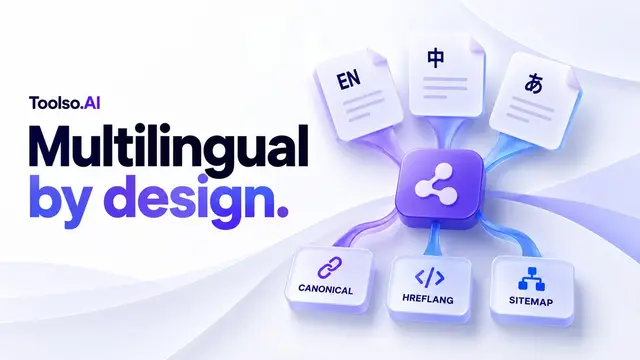
How Toolso structures multilingual URLs, canonical tags, hreflang, sitemaps, and translation fallbacks, with checks for directory builders.
How to produce AI video in 2026: picking a model per shot, prompting for motion, keyframe workflows, real cost math, artifact fixes and Sora migration.

The 2026 automation guide: how Zapier, Make and n8n differ on pricing model, AI agents and self-hosting — plus when a workspace agent beats all three.
The 2026 playbook for coding with Claude: lean CLAUDE.md, plan-first workflows, subagents, parallel worktrees, hooks, and verification loops that work.

A working guide to Copilot in 2026: Agent Mode setup, auto-approve policy, agentic review, cost discipline, and the habits that make agents net-positive.

The current Midjourney guide: prompt structure, every parameter that matters, personalization training, the 4× GPU trap, video mode, and a working loop.
