
Claude Sonnet 4.5 in depth: verified SWE-bench and OSWorld benchmarks, what it changed for agentic coding, and where it stands in 2026.
📌 2026 update: This is an archived review of Claude Sonnet 4.5, released September 29, 2025. Anthropic has since shipped Sonnet 5 (June 30, 2026) and the broader Claude 5 family. For the current lineup, see our Claude updates tracker. We keep this review live because Sonnet 4.5 marked a genuine inflection point for agentic coding — and because knowing where the field was helps you judge where it is.
Sonnet 4.5 topped the major coding benchmarks and was widely described as the strongest coding model available at the time — a claim backed by independent evaluations, not just Anthropic's own numbers.
It aged well. The agentic patterns it made practical — long-horizon task focus, computer use, checkpoint-based workflows — became the template that the Claude 5 family, and competitors, iterated on.
Sonnet 4.5 held the mid-tier slot through four Opus 4.x releases before being replaced. A model that survives four flagship refreshes above it isn't a stopgap — it's the tier the vendor decided was load-bearing.
Released September 29, 2025, Sonnet 4.5 was positioned by Anthropic as "the best model in the world for agents, coding, and computer use." Independent benchmarks largely supported the coding claim:
$3 input / $15 output per million tokens — unchanged from Sonnet 4, which mattered: the top coding model was also the mid-priced one.
Sonnet 5 shipped June 30, 2026. The generational gap, on the suites both were measured against:
| Benchmark | Sonnet 4.6 | Sonnet 5 | Opus 4.8 |
|---|---|---|---|
| SWE-bench Pro (agentic coding) | 58.1% | 63.2% | 69.2% |
| OSWorld-Verified (computer use) | 78.5% | 81.2% | — |
| GDPval-AA v2 (knowledge work) | — | 1,618 | 1,615 |
Sonnet 5's 1,618 on knowledge work edges Opus 4.8's 1,615. A mid-tier model matching the previous flagship on general knowledge work is the clearest evidence that Sonnet 4.5's thesis — capable models don't have to be the expensive ones — was correct and got pushed further.
Sonnet 4.5 launched at $3/$15 per million tokens. Sonnet 5 launched at introductory $2/$10 through August 31, 2026, reverting to $3/$15 after. Nearly a year later, the tier costs the same and does substantially more — which is the entire argument for the mid-tier strategy in one line.
Claude Opus 5 shipped July 24, 2026 at $5/$25 — identical pricing to Opus 4.8. The flagship tier held its price while the workhorse tier absorbed most of the capability gain. That's the same pattern visible across every vendor in 2026.
Held up: The benchmark leadership was real but the margin was narrow (77.2% vs 74.9% for GPT-5 on SWE-bench Verified). What proved more durable was the agentic capability gap — the OSWorld jump and long-session reliability were harder for competitors to replicate quickly.
Launch-week coverage (including the original version of this article) leaned on "world's best coding AI" framing and marathon-session anecdotes like 30-hour continuous tasks. Those claims traced back to demo conditions; day-to-day results depended heavily on harness quality and task decomposition. Treat any single-number superiority claim from that period as a snapshot, not a law.
"World's best coding AI" as a durable label. On the current SWE-bench Pro numbers, Opus 4.8's 69.2% sits six points above Sonnet 5's 63.2%, and both are on a suite that didn't exist when 4.5 launched. Benchmark leadership in this category is a snapshot with a shelf life measured in months.
No. Sonnet 5 is better on every measured axis and — during the introductory window — cheaper. There's no scenario where a new project starts on 4.5.
Migration is a straightforward win: better agentic coding, better computer use, and pricing that returns to parity after August. The patterns you built around checkpoints and long-horizon tasks port directly.
Sonnet 4.5 is the clearest case of a vendor deciding that the mid tier is where capability should compound. Every subsequent Anthropic release, and Google's entire 3.x Flash strategy, is a variation on that decision.
Sonnet 4.5 remained Anthropic's mid-tier workhorse through four Opus 4.x releases, got a 4.6 refresh in February 2026, and was ultimately succeeded by Sonnet 5 on June 30, 2026, which carried the agentic-coding focus forward with stronger tool use and reasoning.
Sonnet 4.5 is the release where the pieces — benchmarks, computer use, checkpoints, memory — first clicked together in one mid-priced model, and everything Anthropic shipped afterward is an elaboration of that combination.
If you're choosing a model today, start from the current Claude lineup. For working practices built on this generation's agentic patterns, see Claude coding best practices, and for how it stacks against Copilot and Cursor, the three-way comparison.
Sources: Anthropic announcement · DataCamp benchmark tests · Surge AI coding evaluation · CodeRabbit analysis · TechCrunch launch coverage
Archived review · Substantially revised July 29, 2026

Seedance 2.5 brings 30-second audio-video generation, 50 mixed references and timed editing. Here is what is official, priced and still worth testing.

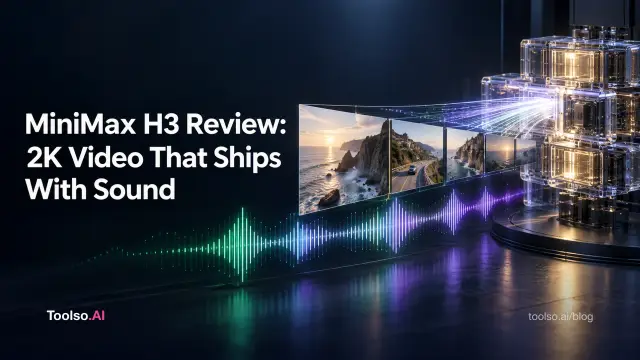
MiniMax H3 generates 2K video with native stereo audio, publishes per-second pricing, and offers H3-Base weights under a Community License.

Hermes Agent blends persistent memory with self-improving skills, but its security and outcome depend on the backend, approvals, and review you choose.
OpenClaw is a high-capability agent runtime whose value depends on deliberate gateway security, skill review, and operating discipline.
AI music in 2026: Suno v5.5's capabilities and legal defiance, Udio's settlement path, the Warner deal retiring unlicensed models, and creator rules.
The AI video market after Sora's exit — with real pricing: $0.50 to $2.50 per 10-second clip, who leads the rankings now, and how to choose per shot.

The honest 2026 free-tier comparison: Gemini's generous bundle, Claude's quality-first plan, ChatGPT's capped breadth, and when free stops being enough.

Archived review of GPT-5's August 2025 launch: the unified-router design, the 4o backlash, what improved — and how it reads from mid-2026.
