
How AI reshaped creative work: 86% adoption, design jobs down 17%, the music settlements that set the template, and what courts still haven't settled.
Adoption is effectively total: 86% of creative professionals now use AI tools in their work, and 87% of creators say it accelerated their business or audience growth. The "will creatives adopt AI" debate ended.
Sentiment did not follow adoption: only 10% of creatives think AI's overall effect on the industry is positive. 58% call it mixed, 28% negative. People use it daily and distrust it simultaneously.
The labor market split rather than shrank: graphic design roles fell 17% while AI-augmented creative roles grew 45%. The work didn't disappear — it was relabeled, and the relabeling cost people their jobs.
Music wrote the legal template: settlement-plus-licensing became the equilibrium after Warner and UMG settled. Sony and UMG then walked away from the same terms with Suno, and that impasse is now the industry's open question.
The courts have settled less than headlines suggest: the March 2026 Supreme Court non-decision confirmed that pure AI output has no copyright owner — but left fair use for training data entirely unresolved.
Adoption crossed from "early majority" to "assumed baseline" during 2025 and consolidated in 2026. The headline number — 86% of creative professionals using AI tools — hides a more useful split:
The interesting cut is by employment type. 74% of freelancers used generative AI in 2025, up from 65% in 2024 — outpacing the 69% rate among traditionally employed creatives. Independents adopted faster because they had no team to absorb the work.
The most consistently reported figure is 8 hours saved per project on AI-assisted design work. That number deserves scrutiny in two directions:
It's probably real for well-defined tasks. Variant generation, background removal, resizing across formats, first-draft layout — these are exactly the operations where a model outperforms a human on speed without a quality penalty.
It's probably overstated as a business outcome. Saved hours convert to profit only if the freed capacity gets sold or reinvested. For salaried designers, 8 hours saved per project often means 8 hours of additional project throughput expected — the productivity gain accrues to the employer, not the designer.
Here is the finding that separates 2026 from 2025: adoption and approval decoupled completely.
| Sentiment about AI's industry effect | Share |
|---|---|
| Positive | 10% |
| Mixed | 58% |
| Negative | 28% |
An industry where 86% use a tool daily and 10% think it's good for them is not a settled industry. It's one operating under duress — people adopting defensively because competitors did, not because they wanted to.
In March 2026 the U.S. Supreme Court declined to hear a copyright case involving AI-generated images. Declining is not deciding — but it left the lower-court rulings intact, which means the operative rule in the U.S. is now settled on one narrow point:
Pure AI-generated content has no copyright owner. Not the prompter, not the AI company, nobody. It falls into a rightsless zone.
The practical carve-out matters more than the rule. Artists can claim copyright when they demonstrate meaningful creative input — editing, refining, composing, or integrating AI output into a broader work. The legal question moved from "is AI art copyrightable" to "how much human contribution is enough," which is a question courts answer case by case and slowly.
February 2026 alone saw at least six major AI copyright suits filed, and the plaintiff mix tells you the conflict has broadened well past the original author-versus-OpenAI framing:
Hearings are scheduled or expected during 2026 in disputes involving Anthropic and music publishers, Google and visual artists, and Stability AI.
The central question — whether fair use shields training on copyrighted material — remains open. The stakes are straightforward: if fair use holds broadly, the current economics stand; if it doesn't, AI companies owe rights holders compensation potentially in the billions, and the entire cost structure of model training changes.
For working creatives, the honest read is: nobody knows yet, and anyone telling you otherwise is selling something.
Music got there first because the rights are cleanest — labels own catalogs, catalogs are enumerable, and infringement is provable track by track. The sequence:
| Date | Event |
|---|---|
| June 2024 | All three major labels sue Suno and Udio |
| Oct 2025 | UMG settles with Udio |
| Nov 2025 | Warner settles with Udio, then with Suno |
| Apr 2026 | UMG and Sony talks with Suno hit an impasse |
Udio's settlement required an actual product pivot: from text-prompt music generation toward a fan-engagement platform where users play with licensed music. The 2026 shape is a walled garden — creations cannot leave the platform. That's a fundamentally different business than the one Udio launched with.
Suno's terms were lighter. It did not have to change what it offers users. The two changes under the Warner agreement: training material must be licensed, and users must pay to download tracks. The product survived; the free tier's commercial utility did not (what this means for music creators).
In April 2026, settlement discussions between UMG, Sony and Suno hit an impasse. The reported reason is instructive: UMG and Sony concluded Warner sold cheap and refused the same trade.
This is the most consequential unresolved thread in creative AI right now. If Sony and UMG hold out and win better terms, the Warner deal becomes the floor rather than the benchmark — and every licensing negotiation in video, image and text re-prices upward.
The most complete transformation. Concept generation, moodboarding, variant production and asset resizing moved to AI-first workflows at most studios. What stayed human: art direction, client relationship, and the judgment about which of forty generated options is the right one.
The most legally constrained. Generation quality is high and commercially usable, but the licensing layer now determines what you can actually ship. Free tiers are contractually barred from commercial use; downloads gate behind paid plans; models trained on unlicensed material face deprecation.
The most saturated. Drafting costs collapsed, and so did the value of undifferentiated drafting. The surviving premium is on point of view and domain authority — the things a model cannot source from a prompt.
The most volatile. The market lost its most prominent model mid-cycle, workflows reorganized around the remaining vendors, and the first filmmaker-side litigation landed in February (current video tool landscape).
Graphic design roles fell 17%. The losses concentrated in production work — the roles defined by executing someone else's direction at volume.
AI-augmented creative roles grew 45%. Same underlying work, different job title, usually different person. This is the part that reads as neutral in aggregate statistics and brutal in individual careers: net employment looks stable while specific people lose specific jobs.
Two findings that appear contradictory but aren't:
The reconciliation: AI absorbs the starting work — the blank-page problem — while the finishing work, the judgment and the client accountability still route to humans. Companies generate more starts, then need help finishing them.
73% of creators say unclear licensing could limit future opportunities; 53% say copyright or licensing issues have already affected brand deals. That second number is the one that changed behavior — it isn't anxiety, it's lost revenue.
The consequence: tools that can prove their training data are worth more than tools that can't. Adobe Firefly's licensed-content positioning looked like a handicap in 2024 and looks like a moat in 2026.
Expect provenance guarantees to become standard in creative procurement the way security questionnaires became standard in software purchasing. Brands with legal exposure will start requiring documented training-data provenance before approving deliverables.
Changed: production speed, the floor of technical competence, the economics of solo operation (48% of creators operate solo, using AI to substitute for the team they don't have), and the volume of competent-but-unremarkable work in every feed.
Didn't change: what makes work worth attention. When execution becomes abundant, judgment, taste, point of view and audience relationship become the scarce inputs. The creators reporting growth aren't the ones producing the most — they're the ones whose distinctive voice got amplified by cheaper execution.
The 2025 question was whether creatives would adopt AI. They did — 86% of them. The 2026 question is who captures the value, and that is being decided in courtrooms rather than product roadmaps.
The honest summary for anyone working in creative fields: the tools are settled, the economics are not, and the legal foundation underneath both is still being poured. Plan for the tools, hedge on the economics, and read your license terms (broader industry context).
Sources: Adobe 2026 Creators' Toolkit Report · Envato — State of AI in Creative Work 2026 · Creative Boom — State of the Creative Industry 2026 · PYMNTS — US Courts and AI Copyright in 2026 · Music Business Worldwide — Warner/Suno settlement · Billboard — What the Suno and Udio deals mean · Figma design statistics 2026 · Epidemic Sound Future of the Creator Economy 2026
Last updated: July 30, 2026

OpenAI's Agents API makes durable cloud agents easier to build. Here is what changed, what remains unproven, and how to deploy it with control.


The 2026 data: 88% of students use generative AI, teachers save 5.9 hours weekly — yet only 13% of schools have a formal AI policy. What to do.

The 2026 landscape: the Digital Omnibus deferring high-risk deadlines to 2027, two new EU prohibitions, GPAI supervision, and the US patchwork.
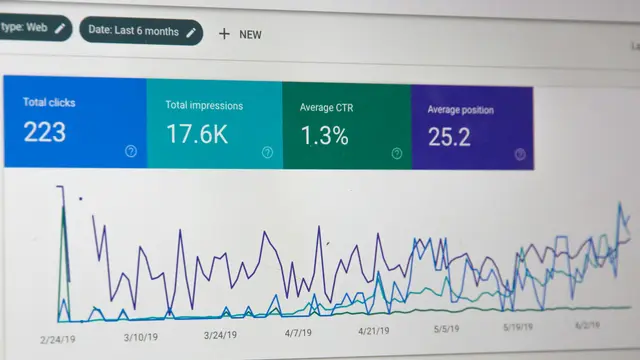
AI in financial services: 90% running AI fraud defenses, 70–80% of US trades executed algorithmically, 52% piloting agentic AI, and the deepfake race.

Expert forecasts for AI by 2030 — AGI timelines, labour-market impact, technological breakthroughs, and the scenarios researchers actually disagree on.
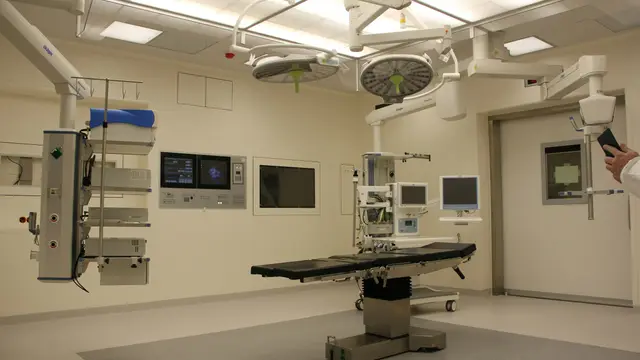
AI in medicine by the numbers: 1,451 FDA-cleared devices, 75% health-system adoption — and the finding that 43% lack clinical validation data.
What 2026 labor data shows: 87,714 AI-attributed cuts in five months, 28,000 monthly declines in tech and finance, and the automation split that matters.
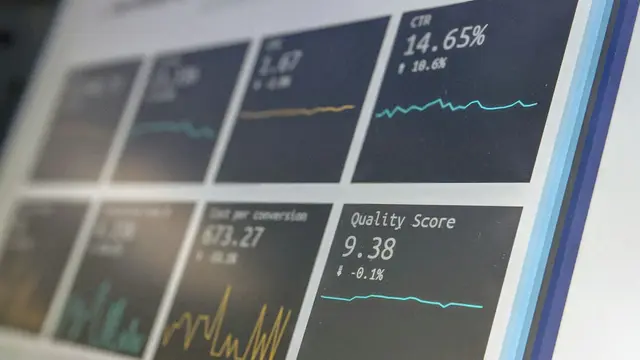
The eight trends defining AI in 2026: the valuation race, release-and-retire models, Sora's retreat, copyright settlements, and regulation's delay.
